Healthcare
Clinics don't run one kind of payroll. Practitioners, support staff and locums are paid differently, practitioner pay shouldn't be visible to everyone who touches payroll, and T4, T4A and provincial rules still have to be right for where your staff work. Powerpay handles each on its own terms, so none of it becomes another deadline someone has to remember.
Who it's for
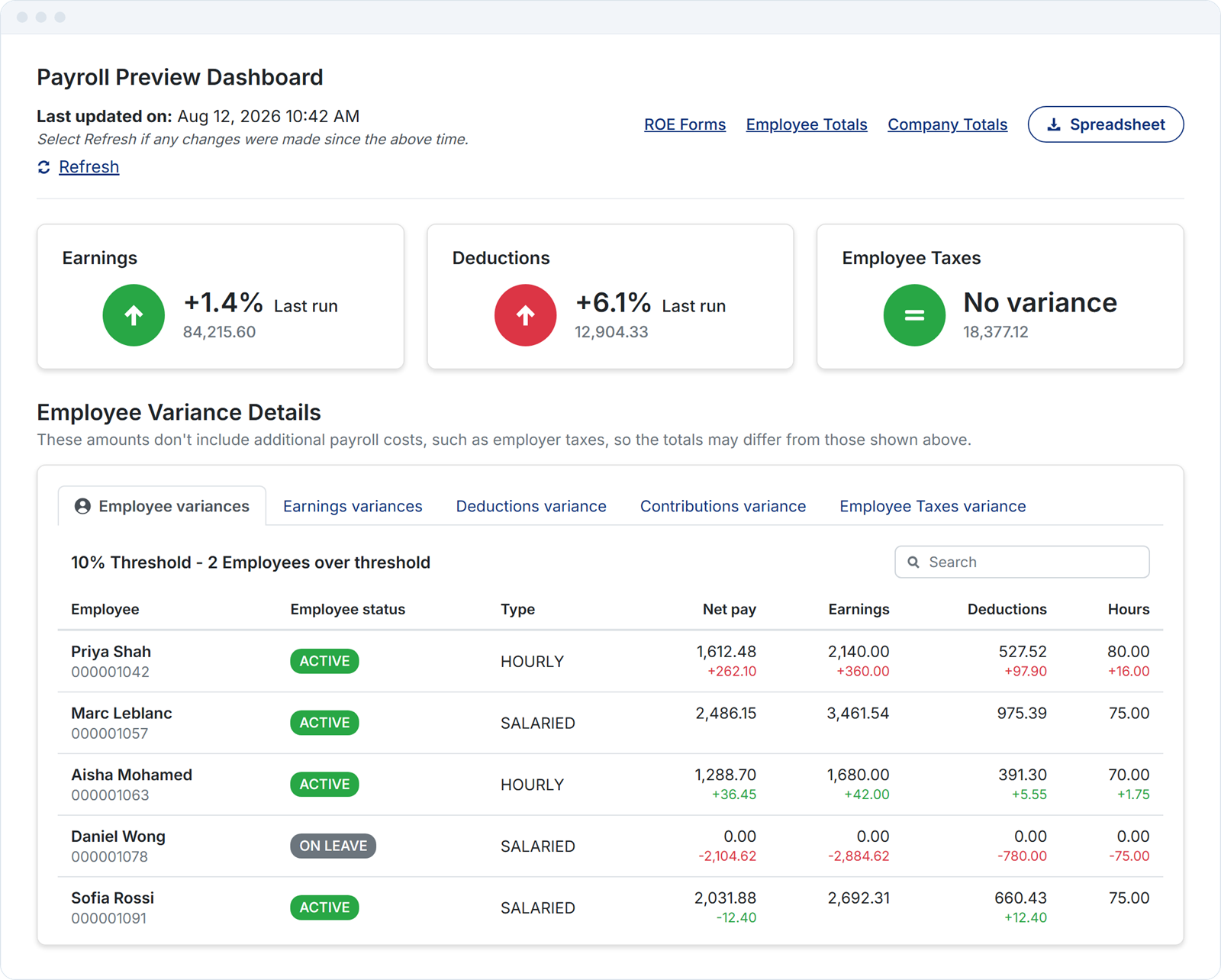
Three different pay treatments, one clinic, one pay run. Powerpay applies the right earning codes, the right CPP and EI handling, and the right T4 or T4A reporting to each, without three separate systems and reconciliation at the end.
Payroll for the employed practitioner. For an associate on a fee split reported on a T4A, payments can run through a T4A-mapped earning code, and Powerpay produces the T4A at year-end once your adjustments are in, without a spreadsheet reconciliation in February.
Custom security roles let the manager approve support-staff time and run reports for the employees you choose, by department or pay type, without opening practitioner records. The bookkeeper gets what they need; nothing more.
Practitioners' permanent salaries carry forward each period. Support staff hours flow in from approved timesheets. Locum hours are entered on the timesheet, with the right tax setup. One pay run, three pay treatments, and T4s and T4As produced at year-end.
Auto Submit isn't a fit here: it applies to a whole payroll, and hourly and locum pay changes every period. If it isn't stable, you shouldn't be automating it.
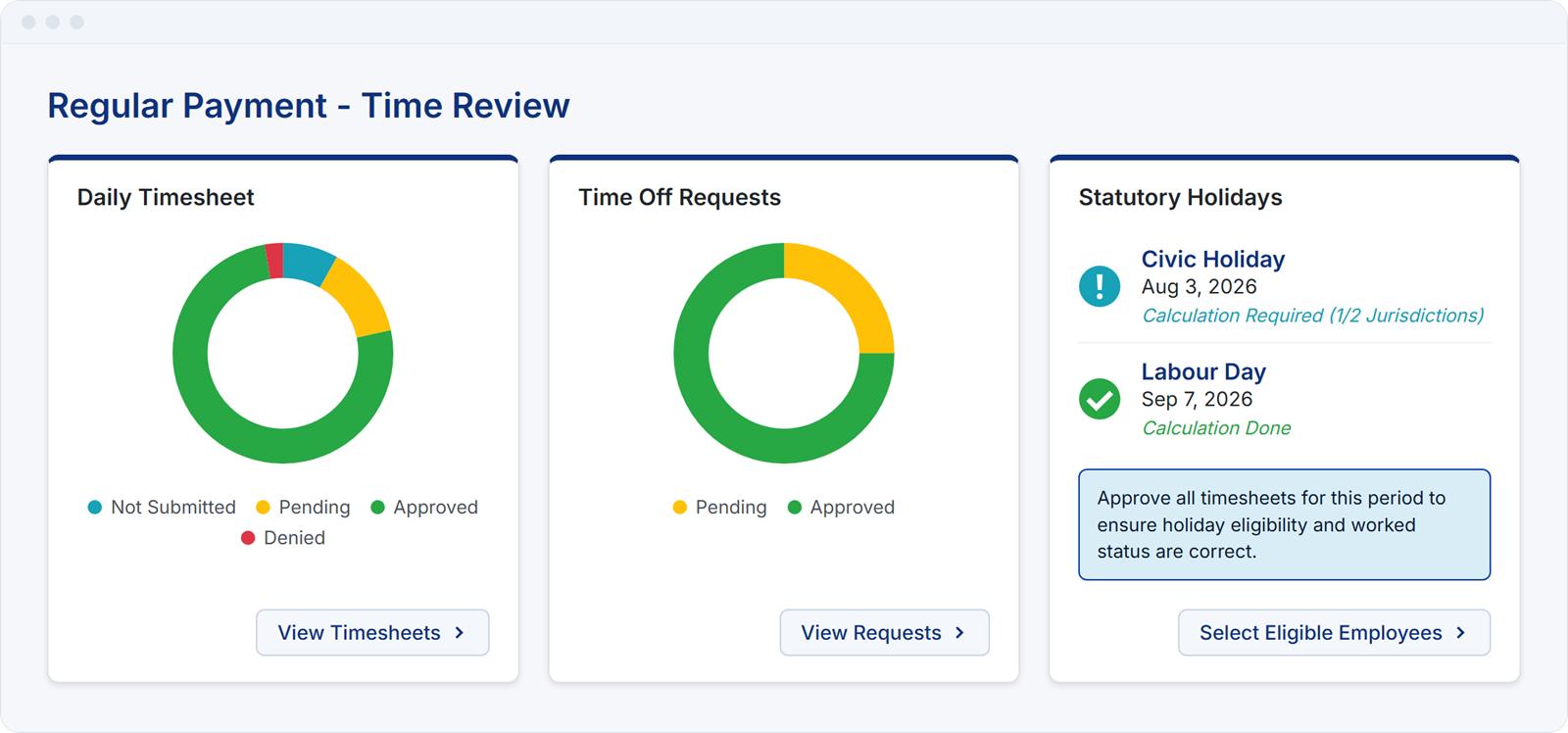
QPP, QPIP, the Quebec Health Services Fund and Relevé 1 reporting are handled natively, with CNESST premiums tracked and, if you opt in, remitted. WCB is supported in Nova Scotia, and Ontario EHT is calculated. Stat holiday pay is calculated from your timesheet hours and earnings for you to review and confirm. Whichever way your practitioners and support staff are distributed, Powerpay applies the right rules by where they work.
Provincial healthcare payroll
Healthcare payroll has more provincial edges than most industries — different rules for EHT thresholds, CNESST, and stat holiday pay for shift workers. Powerpay tracks the ones that matter for clinics.
Already running payroll somewhere else?
Powerpay's team handles the move — employee data and year-to-date balances — so you can switch mid-year without a gap in your pay cycle.
FAQ
It depends on how the locum is classified, which your accountant advises on. An employed locum is paid per shift through payroll and gets a T4. If a locum is reported on a T4A, payments can run through a T4A-mapped earning code, and Powerpay produces the T4A at year-end.
Fee-split practitioners are often reported on a T4A rather than as employees; your accountant advises on classification. Their payments can run through a T4A-mapped earning code, and Powerpay produces the T4A at year-end.
Yes. Each pay frequency is its own payroll, for example salaried practitioners semi-monthly and hourly support staff bi-weekly, and you can switch between payrolls from one login.
QPP, QPIP and QC provincial tax are calculated, CNESST premiums are tracked, and Relevé 1 reporting is included. Bilingual paystubs standard. If your clinic is in Québec, French service is standard.
We don't recommend it for clinics. Auto Submit applies to a whole payroll, and hourly support staff and per-shift locums change every period, so each run stays under your review.
A Canadian payroll specialist will walk through your practitioner mix, support staff, and provincial obligations. No sales pressure, just a conversation.
